Choosing tonnage, bed size, and controls for pressing carpets, felt, and interior trim — a practical guide from a manufacturer that builds these presses in Chakan, Pune.
Automobile NVH (Noise, Vibration, Harshness) parts — floor carpets, dash insulators, hoodliners, wheel-arch liners — are almost all formed under a hydraulic press. Get the press specification wrong and you either overpay for capacity you never use, or you undersize it and choke your own production line. Here's how we help customers spec the right machine.
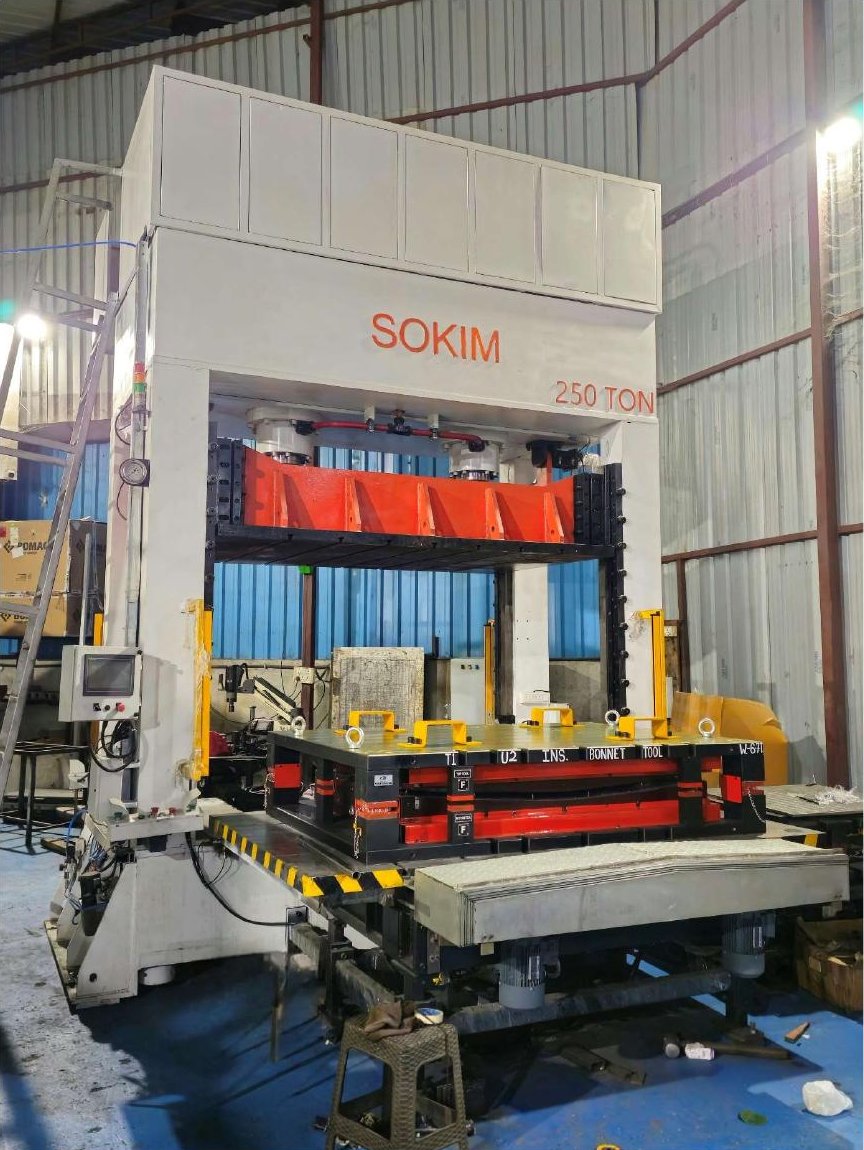
Tonnage is driven by projected part area and material resistance, not by the biggest number that sounds safe. Felt and thermoplastic carpet backings need far less forming pressure than metal stamping, so a press sized for stamping is usually overkill for a pure NVH forming job — unless the same line also trims or punches the part, which raises the requirement.
Floor carpets and headliners are large, irregular parts. If your bed size is sized to an "average" part, every larger variant becomes a bottleneck later. We typically recommend specifying bed size against your largest current part plus reasonable headroom for future models.
A heated bed lets the press itself soften thermoplastic-backed material immediately before forming, useful when you don't want a separate heating stage. A moving bolster, on the other hand, is about tooling flexibility — it lets die makers position and swap tooling precisely without repositioning the whole press, which matters when you run multiple part numbers on one machine.
For NVH parts, cycle repeatability directly affects part consistency — thickness, density, and acoustic performance all shift if pressure and dwell time drift stroke to stroke. PLC-controlled presses with digital pressure and timer settings let you lock in a recipe per part number and reproduce it exactly on every shift.
Full floor pan carpets with tunnel and footwell geometry need genuine deep-draw capability, not just flat pressing — enough daylight, guided ram travel, and press frame rigidity to form deep, complex shapes without wrinkling or thinning the material unevenly.
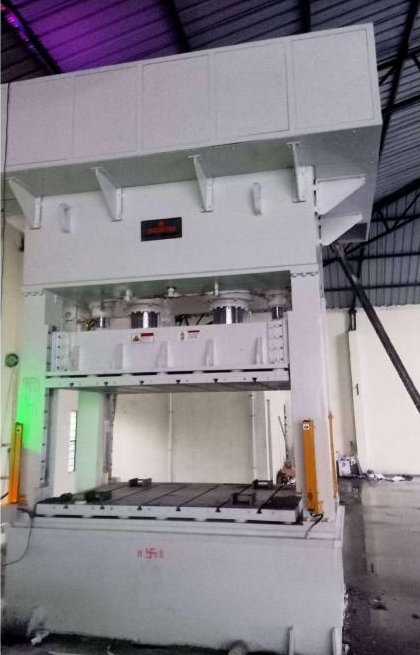
We manufacture hydraulic presses from 100 to 1000 tons at our Chakan, Pune works — with heated beds, moving bolsters, and PLC control built to your bed size, tonnage, and cycle time. Every press is specified against your actual part, not a catalogue size. See our 250T moving bolster press or browse all hydraulic press machines.
 SOKIM
SOKIM